Construction Business Management Software in India: The Complete 2026 Guide
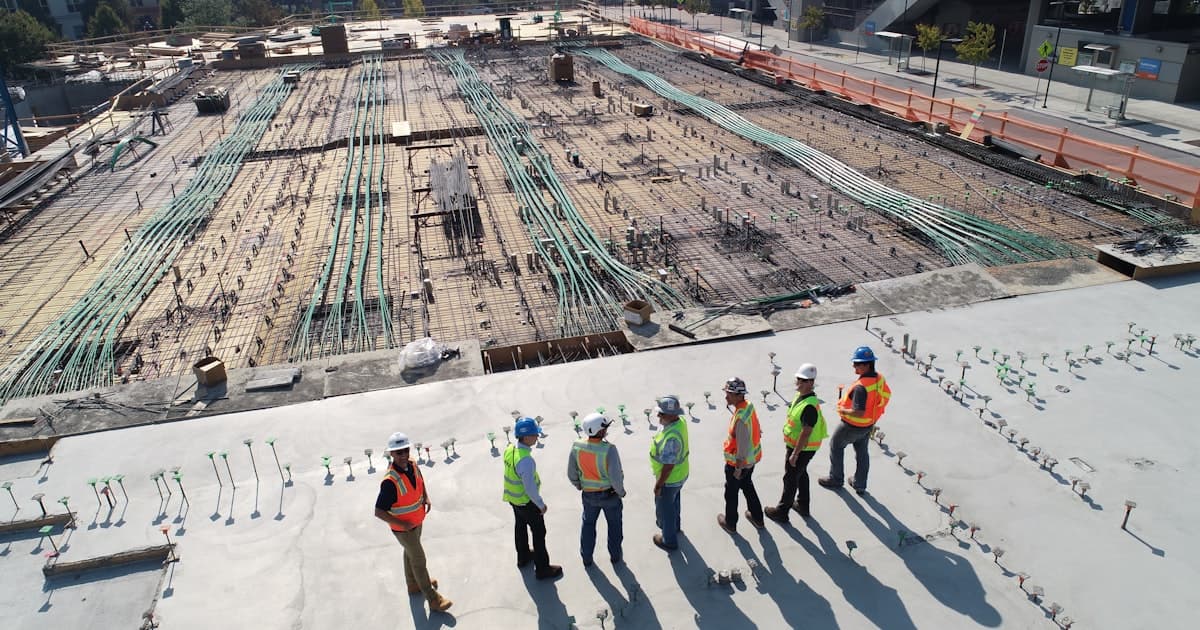
What construction business management software actually covers, six things worth checking before you buy, and an honest look at where Grovia fits for Indian contractors and builders.
Construction business management software is a category of platform built for contractors, builders, and construction companies to run their sites, subcontractors, labour, and billing from one system — instead of split across Excel sheets, paper muster registers, and scattered WhatsApp threads. It matters for any construction business running more than one site at a time, or one that has ever lost track of what's owed to a subcontractor or how many workers actually showed up on a given day. A good one bundles site status and progress tracking, a subcontractor payment register, daily labour attendance with automatic wage calculation, and GST-compliant billing — built around how Indian sites actually run, not a generic project-management tool with a hard-hat icon added on top. Grovia is one option built specifically around this list; below is what to look for regardless of which platform you end up choosing.
Start Your 14-Day Guided Trial — Free
What This Software Category Actually Covers
At its core, construction business management software replaces three things contractors traditionally juggle separately: a site register (which projects are active, at what stage, and who's supervising them), a subcontractor ledger (who's owed what, and how much has actually been paid), and a labour muster roll (who worked, on which site, for how many days, at what daily rate). A genuine platform in this category connects all three to billing, so a site's progress and a client's invoice aren't tracked in two different places that never quite agree. Who needs it: any contractor or builder past the point where a spreadsheet and a WhatsApp group can reliably answer "what's happening on site two right now, and what do we owe the subcontractor there?"
It's also worth being clear on what this category is not. It isn't accounting software with a construction label — it's built around sites, subcontractors, and site-level labour first, with billing as a connected piece rather than the whole product. And it isn't the same as a pure site-diary or safety-forms app, which documents what happened on site but usually has no idea what a subcontractor is owed. The businesses that benefit most are ones juggling several of these threads at once — multiple active sites, several subcontractors with different payment schedules, and a labour force paid daily rather than a fixed monthly salary.
What to Look For
Not every tool marketed as "construction software" in India covers the same ground — some are pure site-diary apps, others are US-built scheduling tools with no Indian billing support. Before committing to one, check it against these six criteria.
1. Site Status & Stage Tracking
A real site record needs two separate things tracked at once: a status (is it active, on hold, completed, or cancelled) and a construction stage (planning, foundation, structure, finishing, handover). Together they answer both "is this site still running" and "how far along is it" — a single dashboard across every active site should show both without opening each project individually.
2. Subcontractor Payment Tracking
Look for a subcontractor register that tracks the agreed amount per subcontractor, what's actually been paid, and the pending balance calculated automatically — not a number someone has to work out by hand from a notebook. This is the single most common source of disputes in Indian construction, and it's worth checking closely before you buy.
3. Daily Labour Logging With Automatic Wage Calculation
Indian site labour is overwhelmingly paid daily-wage, by headcount — not hourly or salaried the way US-built tools assume. Look for software that lets a supervisor log a headcount and a wage-per-head for a site on a given day, and calculates the total wage cost automatically, rather than a generic timesheet feature bolted on from a different market.
4. GST-Native Billing
Progress invoices and final client bills need CGST/SGST/IGST and HSN/SAC codes calculated correctly, every time — hand-typed GST invoices are a common source of costly errors. Confirm the billing module is actually built for Indian tax compliance, not a generic invoicing template with a tax field added on.
5. Mobile Access From the Site
Site supervisors aren't sitting at a desk — attendance, subcontractor updates, and site status need to be logged from a phone, on site, the same day. A platform that only works well from a browser back at the office defeats much of the point.
6. Flat, Transparent Pricing
Several well-known construction platforms sold in India are priced in USD, per user, or only available via a custom sales quote — which makes real cost comparison difficult before you've already had a sales call. A flat, published INR price is worth weighing heavily, especially for a small or mid-sized contractor trying to budget software cost against a project margin.
None of these six on their own justify switching from a spreadsheet. Together, they're what separates a business tool from a glorified checklist app — and it's worth checking a vendor against all six rather than being sold on the one or two features that come up first in a sales call.
Where Grovia Fits
Grovia's Construction module is built around all six criteria above. Sites are tracked with both a status lifecycle (active/on-hold/completed/cancelled) and a construction stage (planning → foundation → structure → finishing → handover), alongside contract value and an assigned supervisor. The Subcontractors module keeps a register per site with agreed amount, paid amount, and pending balance tracked automatically, plus a status lifecycle (active/completed/terminated) as work wraps up. The Labour module logs daily headcount and wage-per-head per site, with total wage cost calculated automatically — matching how Indian site labour is actually paid. GST-native invoicing (CGST/SGST/IGST, HSN/SAC) handles progress and final client bills. The same subscription includes the wider Grovia platform — mobile app, GPS field dispatch for site inspections, WhatsApp-native alerts, a GroAI assistant, and business analytics — at a flat ₹1,550/month (excl. GST) for up to 50 active sites, 10 staff accounts, and 20 GroAI queries a month.
What's missing, honestly: there's no material or stock tracking module, no bill-of-quantities (BOQ) or milestone-based billing engine, and no dedicated Gantt-chart or critical-path scheduling tool — site progress is tracked via stage and status, not a full scheduling engine. If any of those three are a hard requirement for your business today, Grovia's Construction module as it stands won't cover them.
Frequently Asked Questions
What does construction business management software actually do?
It replaces a site register, a subcontractor ledger, and a labour muster roll with one connected system — tracking every site's status, every subcontractor's payment balance, and every day's labour cost in one place, usually alongside GST-compliant billing.
Is this the same as construction scheduling software?
Not quite. Scheduling software focuses on Gantt charts and critical-path timelines. Construction business management software, as covered here, focuses on site status, subcontractor payments, labour cost, and billing — some platforms include light scheduling, but it isn't the core of the category.
How much does construction management software cost in India?
It varies widely. Some platforms price in USD or by custom quote; others, like Grovia, publish a single flat INR price. As a rule, expect an India-built, flat-priced option to cost meaningfully less than a US-built platform sized for the same business.
Do I need this if I'm only running one site?
Not necessarily. A single site with a small, stable crew and one or two subcontractors can often be managed on a spreadsheet without much pain. It's the second site — or the first subcontractor payment dispute — that usually makes the case for switching.





Practical, India-specific advice on running a service business better — no fluff, unsubscribe anytime.